Our circular model
Common operates a structured textile redistribution system that relieves financial hardship while reducing textile waste. We prioritise keeping garments in active use where they deliver the highest social and environmental impact.
The challenge
According to Recycling Victoria’s Annual Report 2024/25, 283,300 tonnes of textiles are disposed of to landfill in Victoria each year. A significant proportion is:
• Landfilled
• Downcycled
• Exported offshore with limited transparency
• Donated locally through fragmented systems without traceability
At the same time, many community organisations report ongoing clothing need among people experiencing financial hardship.
Traditional donation systems are often:
• Informal
• Inconsistent
• Difficult to trace
• Burdened by low-quality garments and dumping
Diversion alone does not guarantee circularity.
Circularity alone does not guarantee equitable access.
What’s needed is structured, accountable redistribution infrastructure.

How our model works
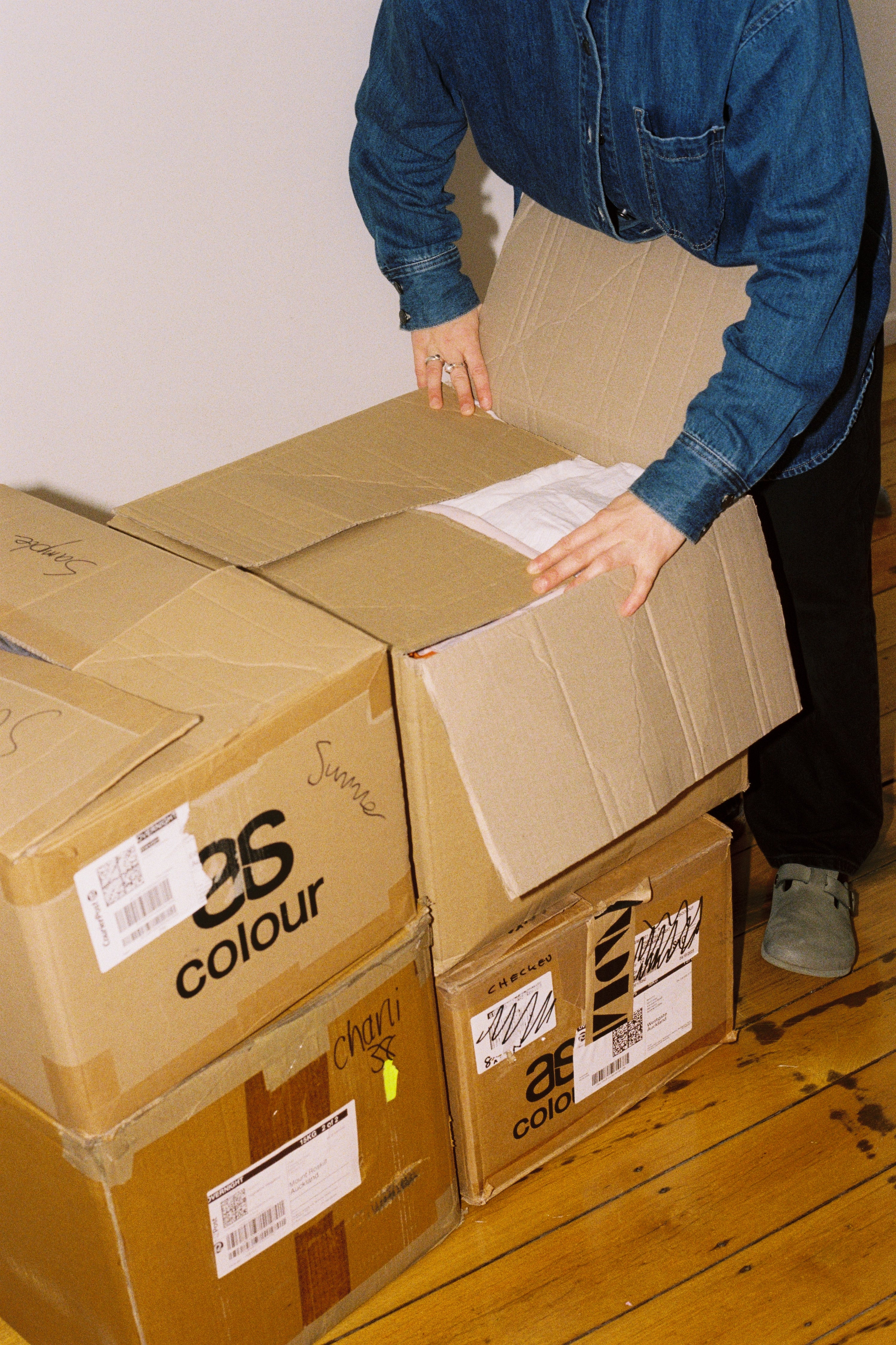
Structured garment intake and vetting
We receive garments through verified and traceable channels, including:
• Brand surplus partnerships
• Prepaid household garment return programs
• Organised workplace textile recovery initiatives
All intake follows defined quality thresholds. Garments are:
• Quality-assessed and categorised
• Graded according to condition and suitability
• Matched to appropriate redistribution, repair or resale pathways
This structured process prevents charity dumping, preserves garment value and ensures accountable allocation.
Organisational allocation
We distribute exclusively through assessed frontline social services partners.
• Bi-monthly partner submitted clothing orders
• Defined allocation criteria aligned to service partner requests shipping/collection
• People access garments in supported case-managed environments
• Structured bulk allocation reduces administrative duplication
This strengthens frontline organisations and improves efficiency.
Public engagement and circular extension
We make redistribution visible and participatory through:
• Public repair and garment care workshops
• Community circular economy activations
• Circular design collaborations with tertiary institutions
These initiatives extend garment lifespan and build practical reuse skills.
Measure and report
Transparency is core to our model.
We track and report:
• Garments redistributed
• Tonnes diverted from landfill
• Local versus offshore pathways
• CO₂ and water footprint preserved
• Partner organisations supported
Our partners receive measurable, accountable impact reporting.
Social and environmental outcomes
• Dignified, needs-based access to quality clothing
• Reduced barriers to employment, housing stability, participation and reintegration
• Strengthened community redistribution infrastructure
• Reduced administrative and welfare pressure by centralising garment sourcing
• Rapid turnaround from request preferred pick up or delivery method
• Extended garment lifespan and value
• Reporting on embedded carbon and water impacts associated with extended garment lifespan
• Diversion from landfill and lower-value pathways
• Increased visibility and traceability within the local textile recovery system
• Shortened supply chains by receiving brand surplus directly into local redistribution pathways


Who we work with and why our model works
We collaborate with:
• Local councils
• Frontline social services and community organisations
• Brands and retailers
• Workplaces for textile recovery
• Local designers
• Tertiary design institutions
• Media for public awareness and visibility
Our model integrates:
• Governance
• Traceability
• Local allocation
• Public participation
• Measurable reporting
It is designed as infrastructure, not a campaign.
Explore partnership
If you’re seeking structured, transparent textile redistribution solutions, as a council, brand or community organisation we welcome the conversation.